

by Suman Gupta
In a rare candid conversation, World Bank President Ajay Banga sat down with Nikhil Kamath on People by WTF to discuss a deceptively simple question: how do you kill poverty? The answer, Banga argues, is almost brutally straightforward. You give people jobs.
It’s not redistributive economics or trickle-down policy. It’s not even ideology. It’s pragmatism. And it cuts to the heart of what the World Bank actually does—and why, in a world fragmenting along geopolitical lines, its work matters more now than it did 80 years ago.
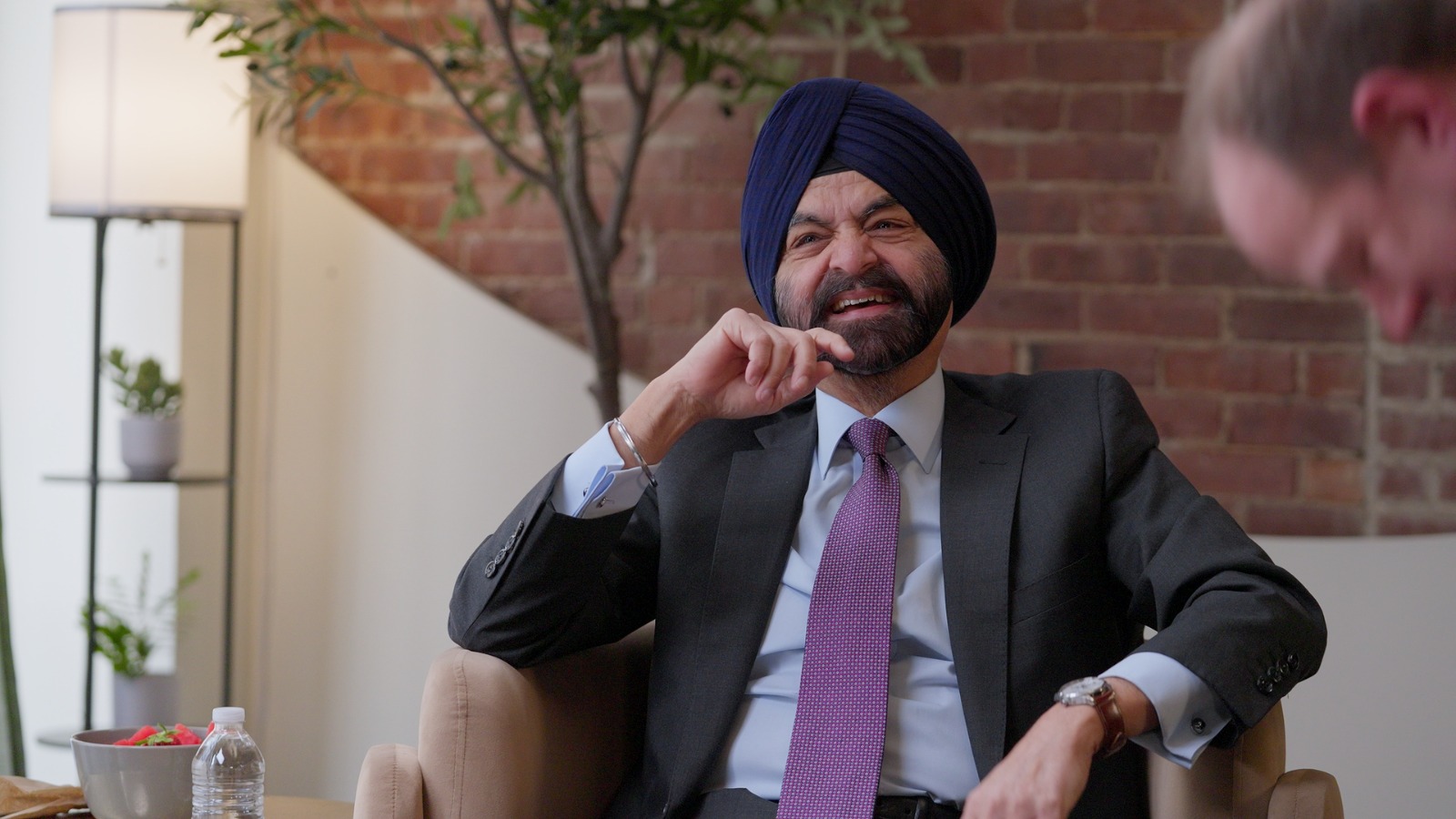
Banga walked Kamath through the architecture of global development: the IBRD, the IDA, the IFC, MIGA. The institutions sound bureaucratic. But behind each is a thesis. The poorest countries get one- third of their capital as grants. Middle-income countries like India get concessional loans. The private sector gets de-risking insurance. Each mechanism exists to answer a single question: how do you make it worth someone’s while to build something in a place where the odds are stacked against them?

The numbers are staggering. The World Bank mobilizes $120 billion annually. Last year alone, it mobilized $70 billion in private capital—up from $40 billion three years ago. That’s not aid. That’s capital chasing return, with guardrails put in place by institutions designed to buy down risk. It’s capitalism with infrastructure.
Here’s where Banga’s pragmatism actually shows up in everyday life: On the day the stock market does well in New York, wine purchases at upmarket restaurants spike that same day. That’s not a coincidence. It’s how people feel. Consumption isn’t about necessity; it’s about mood. Extend that logic globally: if people are optimistic about their future, they spend, invest, take risks. If they’re insecure about jobs or savings, they retreat. This is why Banga keeps returning to a single phrase: hope and optimism are economic drivers that matter as much as fundamentals. In times of geopolitical uncertainty, sentiment can move markets faster than data.
But Banga’s real argument isn’t about finance. It’s about hope. When people have a job—whether they’re a barber, a farmer, an entrepreneur, or an executive—they have more than earnings. They have optimism. And optimism is a driver of human behavior that economists rarely quantify but never underestimate.
This thesis collides directly with current global anxiety. Interest rates have been low for a decade. Asset prices have inflated. Wages have not kept pace. The result: inequality has widened precisely when it should have narrowed. Capital gets outsized returns. Labor doesn’t. Banga doesn’t dodge this. “As long as wage-price growth doesn’t keep up with asset-price inflation, inequality is bound to continue to go up.”
But he also refuses despair. The World Bank isn’t solving inequality by redistributing wealth. It’s solving it by raising the water level so all boats float higher. And the specificity of the work matters. The bank is connecting 300 million Africans to productive electricity by 2030—not one light bulb per roof, but power for a barber shop, a chicken hatchery, a farm. It’s building clinics in villages where a nurse, a technician, and a midwife can diagnose via AI what a remote doctor would have diagnosed. It’s putting technology in the hands of illiterate farmers so they can identify crop disease and buy the right insecticide for 25 rupees. This is not top-down aid. This is bottom-up enablement.
The conversation shifted toward India—a market Banga knows intimately. India’s consumer sector is growing faster than its GDP. Younger Indians are saving less and borrowing more. Infrastructure is being built at scale: roads, airports, ports, power systems. The trajectory of the country is upward, but the trajectory isn’t guaranteed. It depends on whether governments continue to build the infrastructure, governance, and human capital that allow the private sector to create jobs. It depends on whether people remain optimistic about their future.
This is where Kamath’s question about jobs and young entrepreneurs becomes urgent. India’s median age is 28. Yet most of the country’s capital—both financial and political—remains concentrated in the hands of those who built the previous generation’s wealth. Banga’s argument is that the job of institutions, whether the World Bank or a startup incubator, is to de-risk opportunity for those who don’t have it. Women don’t have equity to start businesses. Young people don’t have networks or capital. SMEs don’t have the insurance guarantees that large companies do. So if you want jobs to happen, you have to actively create the conditions for them.
By the end of the three-hour conversation, a clearer picture emerged: the global development challenge of the next decade won’t be solved by ideology or redistribution. It will be solved by pragmatism, infrastructure, and the relentless focus on creating conditions where a young person in a village in India or Africa can start something and make it work. It will be solved by hope. Banga seemed to believe in that possibility. So, clearly, does Kamath.
About People by WTF : People by WTF is a global podcast platform hosted by Nikhil Kamath, featuring in-depth conversations with leaders across business, policy, technology, culture and academia. The show explores long-term institutional, technological and economic questions shaping global society through candid, high-signal dialogue.
Past guests include Elon Musk, Prime Minister Narendra Modi, Bill Gates, Rishi Sunak, Akshata Murty, and Ranbir Kapoor.