
By Lakshman Sundar
Apoorva Avadhana explaining concept of Human-centered Design & Receptive Design Methodologies
“Give a woman an inch, she will park her car! , ” said a traffic constable in in England in appreciation of woman’s ability , dexterity and manoeuvrability in a limited space. In the case of Apoorva Avadhana, a global student from Navi Mumbai, if you give space, she will come out with a wonderful innovative and utilitarian design for the welfare of humanity. She firmly believes that design creates culture, culture shapes values and values determine an ideal future. She cherishes great designs as brilliant collection of beautiful ideas meant to serve mankind.
Her journey
Apoorva Avadhana is a recognized design researcher specializing in accessibility, inclusive design, and assistive technology. Based in Mumbai and affiliated with The Ability Lab at New York University, she is CPACC certified and identifies as a neurodivergent design researcher. With an MPS from NYU’s Interactive Telecommunications Program and a BDes in Human-Centered Design from the Srishti Institute, Apoorva’s work bridges grassroots innovation with inclusive design, using low-cost and open-source emerging technologies to address accessibility in activities of daily living (ADL). She has professional experience as a UX researcher and Accessibility SME, for clients like IBM, TSB, and MetLife. Her research, residencies, and exhibitions have received international recognition, with her work presented at leading conferences and supported by numerous grants and awards.
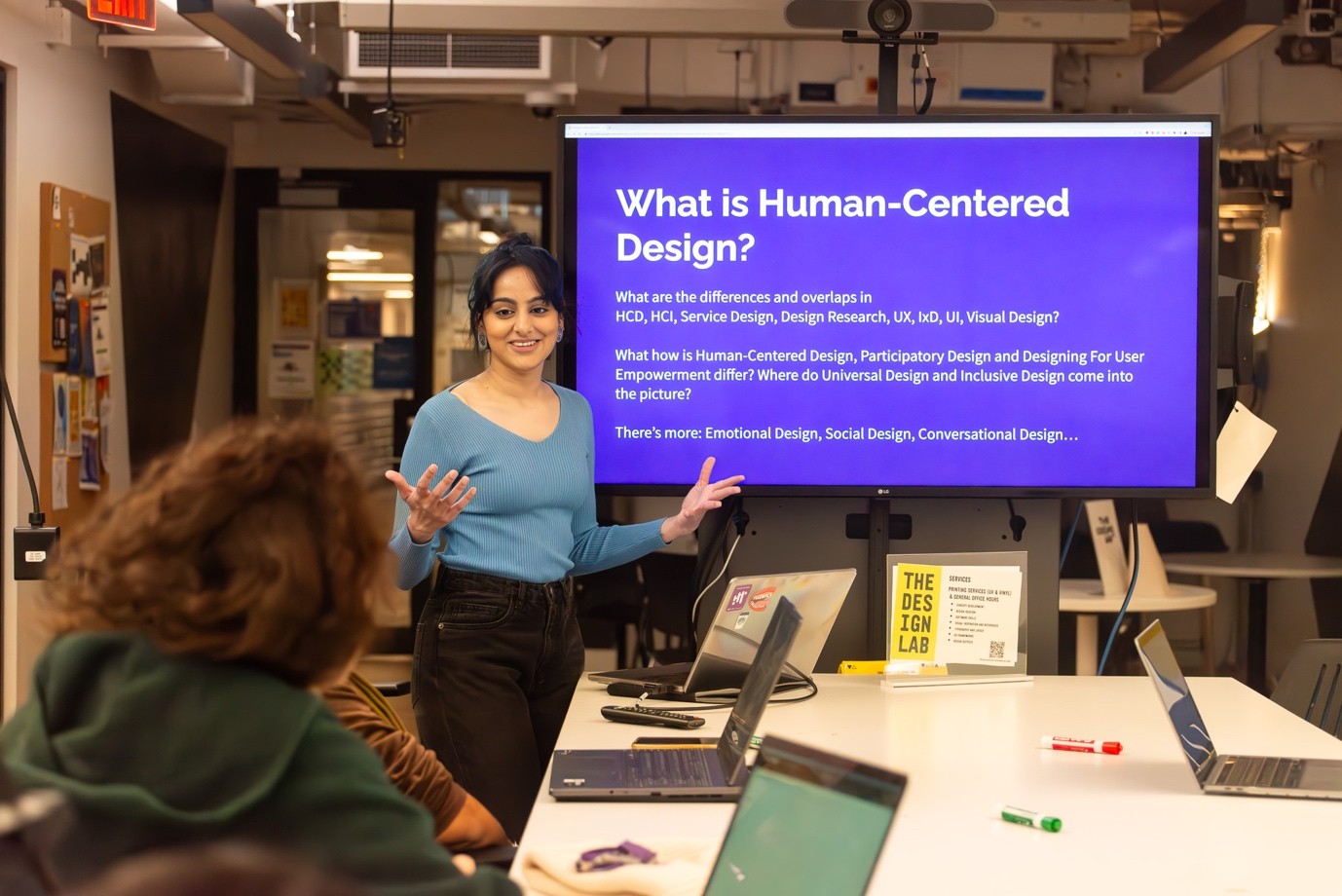
She has gained badges, honours and laurels and she led many important workshops and trainings in Accessibility and Corporate Design Thinking Frameworks. Her work spans a vast gamut of inclusive design, research, teaching, and interdisciplinary collaborations at the intersection of AI, accessibility, and assistive technology.
Apoorva’s practice is grounded in the understanding that disability is not inherent to an individual but shaped by societal contexts. She often draws on the distinction between impairment—a biological condition—and disability—a result of exclusion and marginalization within the environment. As she explains, “A person isn’t disabled—the society is.” Her work investigates how these social aspects vary across regions—from cities to towns to villages—revealing how accessibility challenges shift with context
Ability Project
Apoorva is a research affiliate with the NYU Ability Project. She played a key role in success of various projects to develop low cost and open-sourced assistive tools to reach people across economic backgrounds and situations that cannot afford proprietary assistive tools.
The New York University Ability Project is an interdisciplinary research space dedicated to the intersection between disability and technology. Among the Ability Project’s fundamental principles is that technology serves people best when they participate in its design. Participatory research ensures access to the critical knowledge of those living with disabilities while also offering opportunities for those without disabilities to better understand what life is like for their collaborators. Collaboration, rather than problem solving in silos, produces more creative results.
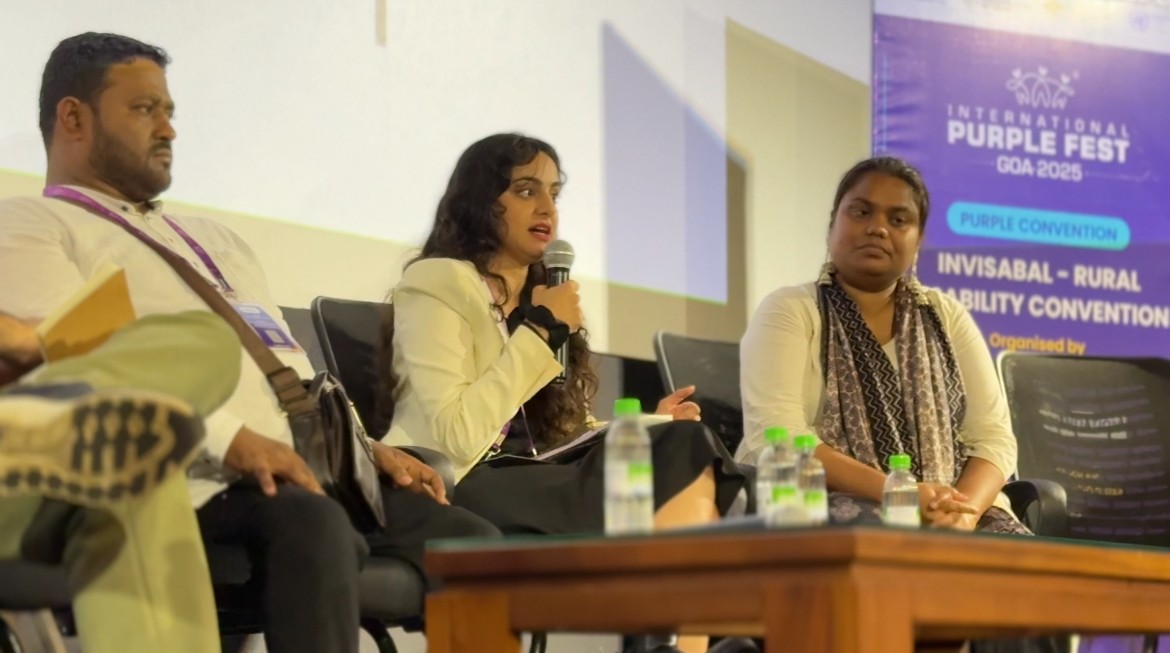
Apoorva talking on Rural Inclusive Innovation Methodologies at the InviSabal Panel with the Tata Steel Foundation at the Internation Purple Fest 2025, Panjim,
‘Purple Fest 2025’
In October 2025, she participated in the high octane International Purple Fest 2025 held at Panjim Goa.
The International Purple Fest is a significant global movement aimed at promoting inclusion and accessibility for persons with disabilities. The 2025 edition marks the third iteration of this festival, organized by the Government of Goa in collaboration with the Ministry of Social Justice and Empowerment, Government of India, and the United Nations. The theme for this year is “Universal Design and Inclusive Thinking,” emphasizing the importance of creating spaces, products, and services that are usable by everyone, regardless of ability. Apoorva was part of a panel discussion conducted by Tata Steel Foundation called InviSabal – Rural Disability Convention on subjects related with Rural Inclusive Innovation.
In her talk, Apoorva emphasizes that when speaking of activities of daily living in rural areas, the conversation should extend beyond high cost assistive technologies rather towards “survival, dignity, and participation.” The question, she argues, isn’t how to get a wheelchair, but how to independently go to the bathroom situated outside the house. Well-designed products built for urban settings fail in rural contexts because they require maintenance systems, controlled environments, and specialized materials; conditions that are rarely available in rural India. “Plastics break, metals corrode, technology fails,” she says. “And the cost of broken products is borne by the people—in money, in loss of independence, and in ability to perform every task.”
Her work challenges the notion of perfection in design, advocating instead for concretion and jugaad—India’s culture of ingenuity and adaptation. “We are a society of jugaad, not perfect systems,” she reminds us. “As an infant, I didn’t sleep on a manufactured crib;
I slept in a jhula fashioned \out of my grandmother’s saree.” She points out how everyday materials like bamboo poles, repurposed as canes or crutches, demonstrate resilience and accessibility far better sustainably suited to rural realities.
Apoorva proposes co-creation as the path forward—working with local artisans, healthcare workers, and users rather than designing for them. Such collaboration, she notes, must grow from the crafts, crops, and waste materials already present in a community, making accessibility not an imported solution but a lived, contextual practice.
Benefits
Creative designs can make a huge impact on a brand or product or project. Some of the benefits: Unique designs grab attention and set them apart from competitors. Creative designs help establish a strong brand voice and aesthetic. Visually appealing designs capture users’ attention and encourage interaction. Designs can simplify complex information and make it more accessible. Well-designed elements like Call To Action(CTAs) can increase change rates. CTA designs help make elements highly visible. Strong product design attracts attention and communicates value quickly, directly impacting revenue. Consistent and thoughtful design builds trust and emotional connection with users, encouraging them to return and recommend the product. It enhances customer loyalty.
Published Works
Apoorva Avadhana’s published works include Plural Navigation: Navigation for a Wholesome Experience and Receptive Design Methodologies: Human-Centered Design Methodologies that are receptive to adaptation, accessibility, and inclusivity.
Linkedin: https://www.linkedin.com/in/apoorva-a/
Email: apoorvaavadhana@gmail.com
The writer Lakshman Sundar is a Navi Mumbai-based Freelance Journalist