

by Suman Gupta
-
The purpose of the Human Brain Project is to better understand brain function and develop solutions to cure brain diseases
-
The MoU was signed between Amrita and Swiss Federal Institute of Technology Lausanne (EPFL) in Switzerland for working together on the Project, in collaboration with University of Pavia in Italy and Aix-Marseille University in France
-
The development comes closely on the heels of Amrita Vishwa Vidyapeetham launching the Amrita Mind Brain Center (AMBC) at its Amritapuri campus
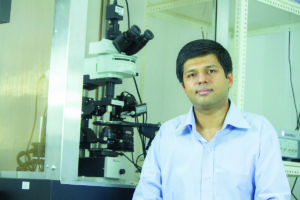 Talking about the MoU, Dr. Shyam Diwakar, Associate Professor, Amrita School of Biotechnology, Amrita Vishwa Vidyapeetham, said: “Functional signals directed by MRI techniques are widely used in specialty hospitals to monitor brain activity non-invasively. However, to connect these signals to the underlying activity of brain cells or neurons has been a challenge. In a project called BOLDsim, which is a part of Human Brain Project’s voucher grant, we will develop a new computational tool for modeling functional signals in the brain using cellular data-driven models.”
 Said Dr. Venkat Rangan, Vice-Chancellor, Amrita Vishwa Vidyapeetham: “I am very happy that Amrita has become the first University in India to partner with EU’s Human Brain Project and will model a simulator for better understanding of brain conditions and brain function. Amrita is a research-intensive institution that has over the last 15 years established more than 180 collaborations with the top-500 world-ranked universities. This MoU will add a new dimension to our university’s cutting-edge neuroscience research.”